Di gambla fallacy
Di belief seh a result “due” cause it nuh show up fi a while.
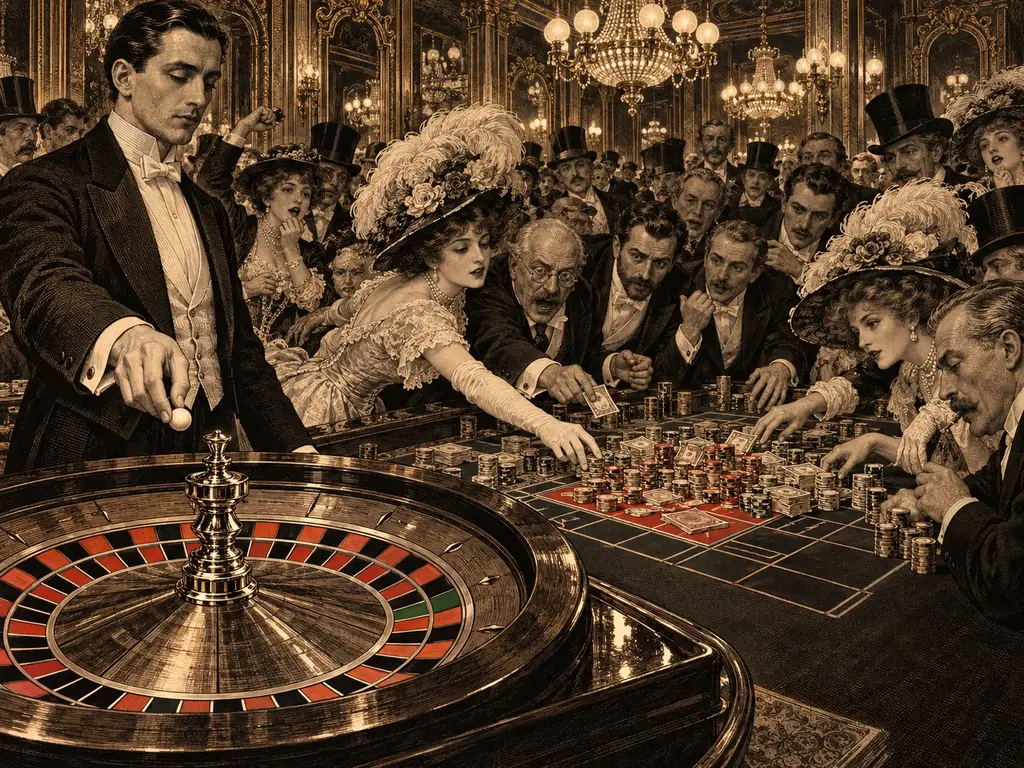
Afta ten red, di probability fi black still a 18/37. Di wheel nuh keep no record an it nuh owe nutten.
Di fallacy
If redbet demRedEven-money bet pon di 18 red numba. Inna French: rouge.Read di whole ting → come up ten time, nuff playa feel seh blackbet demBlackEven-money bet pon di 18 black numba. Inna French: noir.Read di whole ting → “due” an dem bet suh. Odda one feel seh red “hot” an dem bet dat. Both a reason fram a sequence weh done already to a spin weh nuh happen yet. Di ballgearBallDi likkle ball weh di dealer fling roun di track di opposite way to di rotor. Modern ball mek outta ivorine or Teflon, 18–21 mm.Read di whole ting → nuh know wah di las ten spin did be; di pocketgearPocketOne a di 37 compartment wid numba pon di rotor. Nex name: slot, cup.Read di whole ting → dem a di same size dem did be a hour ago; di probabilitymathsProbabilityDi chance fi a result, fram 0 to 1 or 0% to 100%. One numba: 1/37 = 2.70%.Read di whole ting → fi black a 18/37 like it always did be.
Wah mek it feel true
Inna di long run, di share a red an black do come close to 18/37 each. Di law a big numbamathsLaw a big numbaDi average a independent result dem come closer an closer to di expected value as di numba a try dem grow (di more spin, di closer to average).Read di whole ting → guarantee dat. But dem come close by dilution, nuh by correction: afta 1,000 more spin, di ten extra red a jus a roundin error inna di proportion, nuh cause black ketch up but cause di sample grow. No mechanism nuh deh weh mek black more likely, an di law a big numba nuh need one.
Monte Carlo, 18 August 1913
Black come up 26 time back to back pon a table inna di Casino de Monte-Carlo. Fram roun di fifteenth black, playa dem pile pon red, doublin an doublin again, evry spin “more sure” dan di las one. Di casino win millions a franc. Fram di fus black, di run did have a probability a 1 outta 137 million, an di probability seh it woulda happen somewhere inna di world casino dem one day did basically a one. A dat mek dem also call di gambla fallacy di Monte Carlo fallacy.
Nutten special. It happen one time outta 44.
Playa dem start notice. Red “due”.
Di table full up. Stake pon red double afta evry loss.
Fortune lose. Evry new black mek red feel more sure.
Di run end. Di casino done win millions a franc fram people weh a bet gainst a run weh couldn “know” seh it a run.
Di hot hand
Fi back a colour cause it pon a run a di same mistake turn roun: yuh expec di run fi keep goin instead a fi end. Psychologist call it di hot handmyth demHot handDi idea seh a run a win, or a one result, mek anodda one more likely. At di wheel it a di gambla fallacy tun roun.Read di whole ting →, afta a 1985 study by Gilovich, Vallone an Tversky weh look fi run inna basketball shootin an neva find none outside a chance. Inna 2018 Miller an Sanjurjo show seh di test itself did lean: inna a short record, di share a hit right afta a hit come out unda di shoota overall rate pon average, suh a playa wid no hot hand at all look likkle bit cold. Wen yuh correct it, di same data show a likkle hot hand. A person can warm up; a wheel nuh have no form fi be inna. Some playa hold both belief same time, seh a run keep goin till it “too long” an den it end. Pon a fair wheel, evry version have di same expected valuemathsExpected valueDi average result pon evry bet inna di long run. −1/37 a di stake fi evry standard European bet.Read di whole ting → as fi pick a colour by toss a coin: −2.70% a di stake.
Pon a real table
Croson an Sundali (2005) watch 18 hour a security video fram one double-zeropon di wheelZeroDi one green pocket weh no even-money, dozen or column bet nuh cover; a weh di house edge come fram. Nex name: single zero, 0.Read di whole ting → table at a big casino inna Reno: 139 playa weh put dung 24,131 bet. Pon di even-money betbet demEven-money betRed/black, odd/even, high/low. 18 numba, pay 1:1.Read di whole ting → dem, di playa dem did split bout even between follow short run an go gainst dem. Afta five a di same back to back dem lean gainst di run, an afta six or more, 85% a dem bet did deh pon di odda side. Di same playa dem show di hot hand bout demself: afta a win pon di numba dem, dem cover 13.6 numba pon di nex spin pon average, gainst 9.2 afta a loss. Dem wheel neva show no sign a bias, suh none a dis neva change wah any a dem coulda expec.
Outside di casino
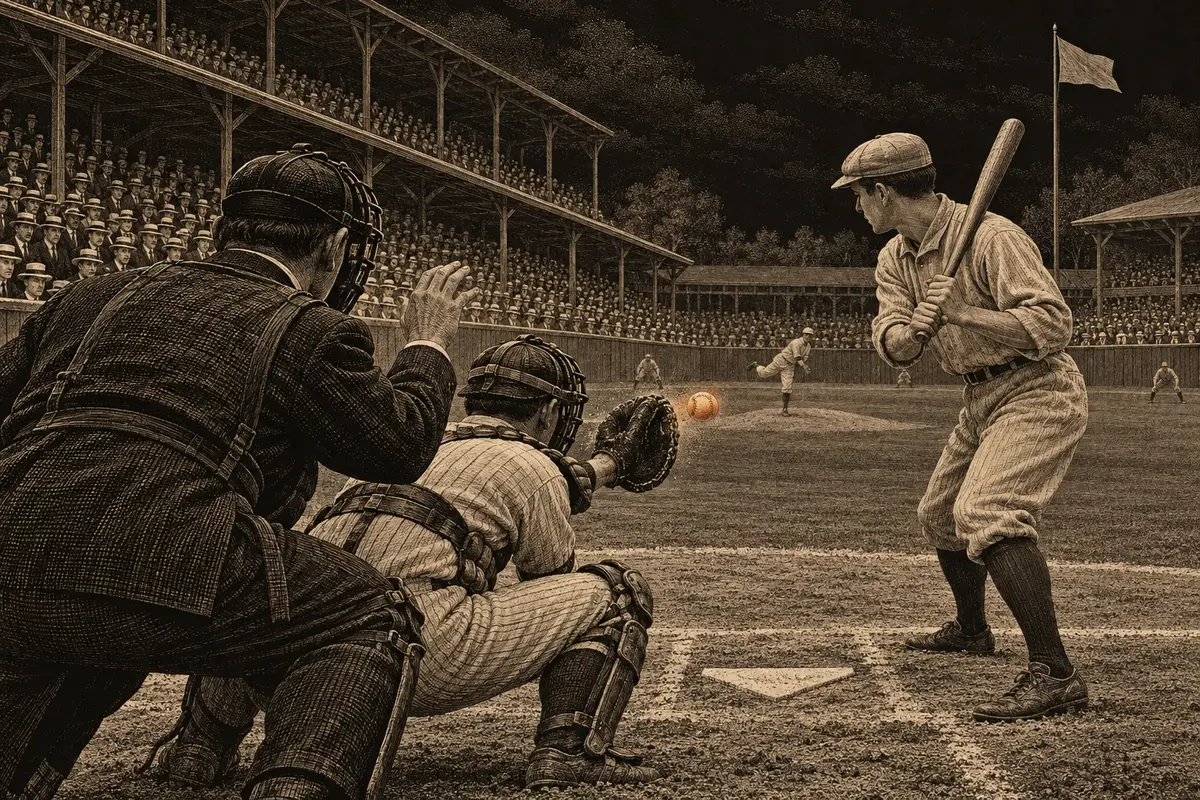
Di same pull show up weh people mek real decision. Clotfelter an Cook (1993) follow Maryland daily numba game: di money weh people stake pon a numba drop hard as soon as dem draw it, an it tek months fi come back, even though di draw nuh have no memory. Chen, Moskowitz an Shue (2016) find it mongst professional. United States asylum judge did up to 3.3 percentage point more likely fi refuse a case if dem did grant di one bifo. Baseball umpire did 1.5 point less likely fi call a strike afta dem call one, an more dan double dat pon close pitch. Inna a field experiment wid loan officer weh get a flat fee, up to 9% a decision turn roun dis way. Di case dem come inna random order, suh di las decision neva seh nutten bout di nex one, jus like how di las spin nuh seh nutten bout di nex one.
Di backwards gambla fallacy
Di philosopher Ian Hacking (1987) name a third version. Smaddy walk inna a room, see a pair a dice land double six an decide seh dem mus did roll nuff time already. Evry roll have di same chance fi come double six, di fus one a di evenin or di tousandth, suh wah yuh see nuh tell yuh nutten bout ow long di game a go. At roulette, a di playa weh reach a board weh show eight red an decide seh di table mus did a spin fi hours fi mek dat. Di ordinary fallacy read di pas inna di nex spin; dis one read a rare sight inna a pas weh nobaddy neva see.
A psychologist weh did believe it
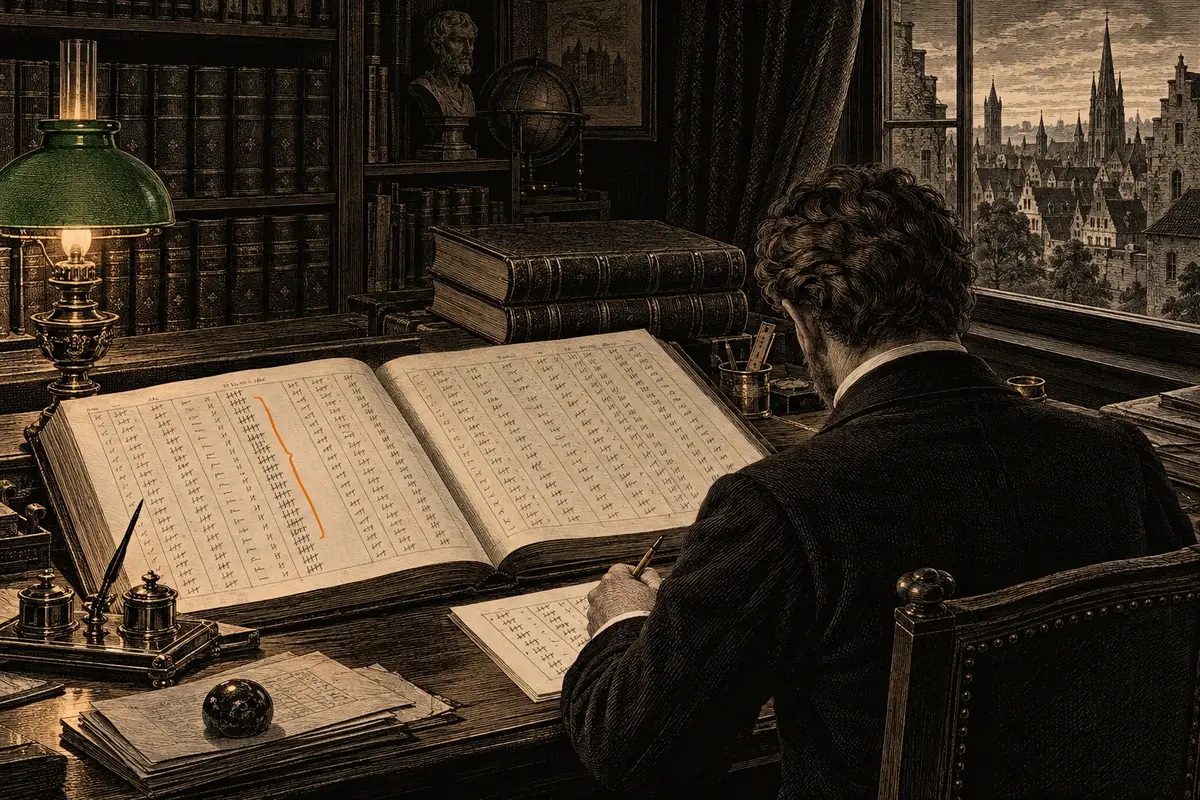
Di fallacy did have educated people fi defend it. Di German psychologist Karl Marbe go tru four register a 49,152 birth each, find seh di longes run a boy or a girl back to back a 17, an decide seh long run rarer dan chance allow, suh a run mek di odda result more likely. Chance alone seh different: inna 196,608 birth, a run a 17 or more show up bout four time outta five. Marbe did find exactly wah a random sequence look like. Epstein (2013) tell di case again; Probability of Streaks give di roulette version.
Weh di fallacy nuh apply
If di wheel did bias by physics, di pas spin dem woulda tell yuh sumting, cause dem woulda be evidence bout di pocket dem, nuh bout luck. Dat a di Lab subject, an it need tousands a spin fram one wheel weh yuh know fi seh anyting. Fi a run a ten red pon a wheel weh yuh nuh know, di bias explanation much less likely dan di chance one.
Question dem
No. It apply to any independent event weh repeat: dice, coin, lottery numba.
Di proportion dem wi come close. Yuh result wi still be bout −2.70% a wah yuh bet.
No law a averages nuh deh. A law a big numba deh, an it work by dilution.
Fun wid maths
Try dem yuhself fus. Evry ansa fold up; open it wen yuh ready.
Afta 10 toss, a coin show 7 head an 3 tail. Afta 1,000 toss it show 517 head an 483 tail. Di tail dem did ketch up?
Show di ansa
Ansa No. Di gap grow fram 4 to 34. Only di ratio come closer to even.
Di ratio a head to tail drop fram 7/3, bout 2.33, to 517/483, bout 1.07. Dat a di law a big numbamathsLaw a big numbaDi average a independent result dem come closer an closer to di expected value as di numba a try dem grow (di more spin, di closer to average).Read di whole ting → a work.
Di gap between dem grow, fram 4 to 34. Wid a fair coin, a gap a roun 30 afta 1,000 toss a normal: di usual gap grow roughly wid di square root a di numba a toss, while di ratio settle toward 1.
Nutten neva pull di tail dem back. Di extra head dem fram early get water dung by di nex 990 toss, nuh correct.
Toss a coin four time an look only pon di toss dem weh come right afta a head. Wah share a dem a head? Work it out fi each a di 16 sequence weh possible an tek di average a di share dem. It a 50%?
Show di ansa
Ansa No. It a 17/42, bout 40.5%. Wen yuh look pon it dis way, a fair coin look like it go cold afta a head.
List di 16 sequence. Two a dem, TTTT an TTTH, nuh have nuh head inna di fus tree toss, suh nutten follow a head; dat lef 14.
Inna each one, tek di toss dem weh follow a head an find di share weh a head. HHHH gi 3 outta 3. HHHT gi 2 outta 3. HTHT gi 0 outta 2. Go tru all 14: six sequence gi 0, four gi 1/2, one gi 2/3 an tree gi 1 (HHHH, THHH an TTHH).
Add di share dem: 4 × 1/2 + 2/3 + 3 = 17/3. Divide by 14: 17/42 ≈ 40.5%.
Nuh toss nuh favour tail; each one a 50–50. Di tilt come fram average sequence by sequence: a sequence full a head have nuff toss fi look pon but count one time, di same as a sequence wid jus one. Miller an Sanjurjo (2018) show seh di 1985 hot-hand study did measure it basketball playa dem dis way, suh playa dem weh look like dem nuh run hot more dan chance did fi true run hot a likkle more.
Sumting fi laugh
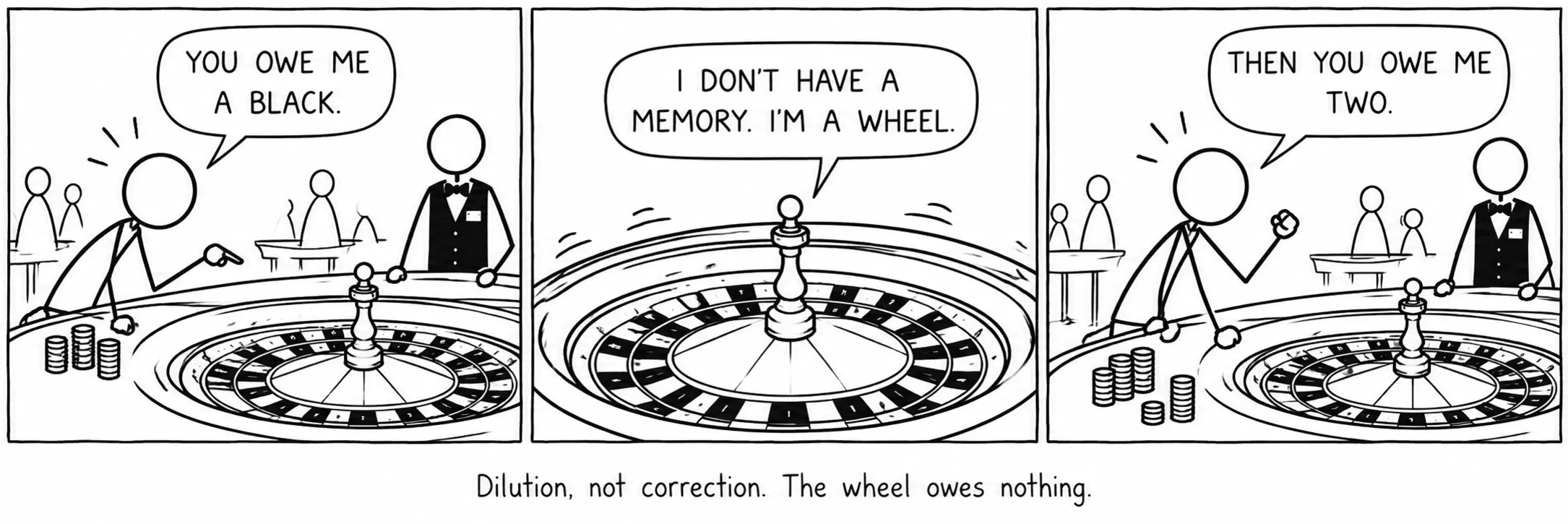
Dilution, nuh correction. Di wheel nuh owe nutten.
Source dem
- Feller, W. An Introduction to Probability Theory and Its Applications, Vol. 1.
- Schwartz, D. G. Roll the Bones: The History of Gambling.
- Ethier, S. N. The Doctrine of Chances: Probabilistic Aspects of Gambling.
- Epstein, R. A. The Theory of Gambling and Statistical Logic, 2nd ed.
- Croson, R. & Sundali, J. “The gambler’s fallacy and the hot hand: empirical data from casinos.”
- Chen, D. L., Moskowitz, T. J. & Shue, K. “Decision making under the gambler’s fallacy: evidence from asylum judges, loan officers, and baseball umpires.”
- Clotfelter, C. T. & Cook, P. J. “The ‘gambler’s fallacy’ in lottery play.”
- Gilovich, T., Vallone, R. & Tversky, A. “The hot hand in basketball: on the misperception of random sequences.”
- Miller, J. B. & Sanjurjo, A. “Surprised by the hot hand fallacy? A truth in the law of small numbers.”
- Hacking, I. “The inverse gambler’s fallacy: the argument from design. The anthropic principle applied to Wheeler universes.”