Roulette an maths inna school
A roulette wheel mek probability easy fi picture. Dis a ow fi use it inna a lesson widout encourage gamblin.
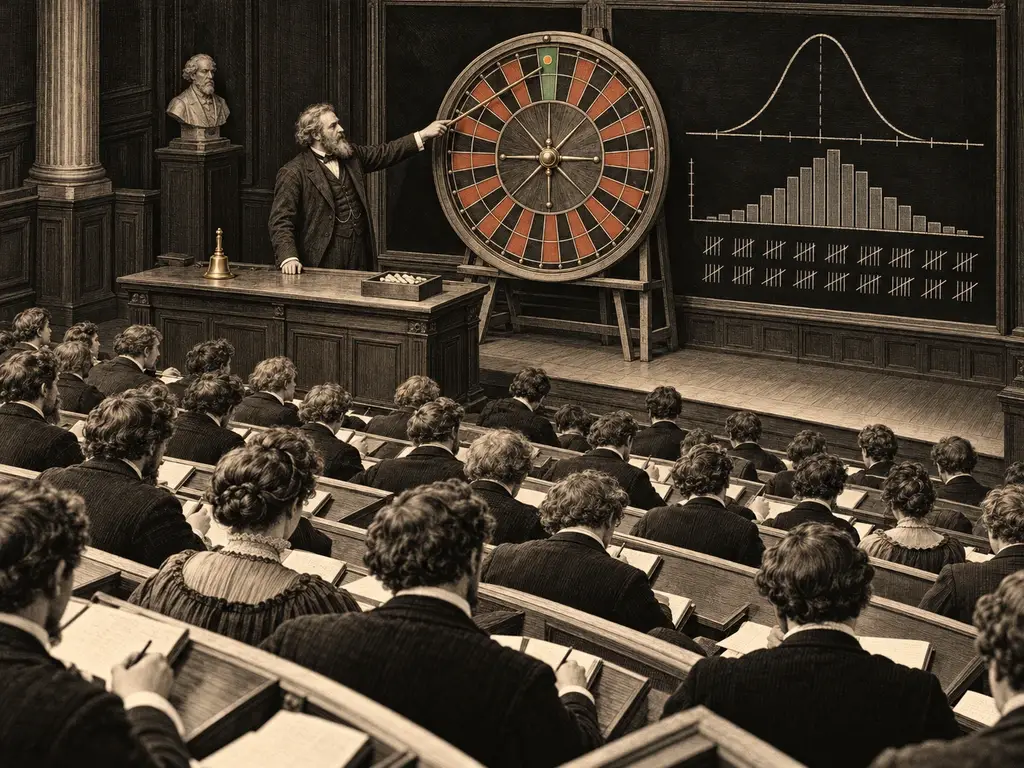
Thirty-seven result weh equally likely, fix payout, independence, a negative expectation weh wi know, an a long human record a get it wrong. Roulette show expectation, variancemathsVarianceA measure a ow wide di result dem spread roun di expected value. High fi straight up, low fi even-money bet.Read di whole ting →, di law a big numbamathsLaw a big numbaDi average a independent result dem come closer an closer to di expected value as di numba a try dem grow (di more spin, di closer to average).Read di whole ting →, di gambla fallacy, hypothesis testin an di birthday problem betta dan coin or dice.
Wah mek roulette
A coin have two result an a dice have six; both a dem too small fi show di birthday problemmathsBirthday problemOw much people it tek bifo two a dem probably share a birthday, or ow much spin bifo a numba probably come again. Pon a 37-pocket wheel, 8 spin enough fi a betta-dan-even chance.Read di whole ting → or a chi-square testlabChi-square testStatistical test weh compare di hit dem yuh see inna evry pocket wid di n/37 yuh fi expec. Dem use it fi judge if a wheel bias.Read di whole ting → wid any drama. A deck a card have memory. Roulette have 37 result weh equally likely, fix payoutmoney mattaPayoutWah a bet weh win gi yuh back, weh dem quote as “X to 1” on top a di stake weh come back.Read di whole ting → weh mek expectation a one-line calculation, independence cause a ow dem build it, an a edge weh small enough fi hide inna a session an big enough fi run a whole year. It have two century a fallacy weh people write dung too, fi tek apart.
Di lesson dem inna order
Teach widout teach gamblin
Use play money an di Demo Game, weh nuh have no real stake. Start wid di expected valuemathsExpected valueDi average result pon evry bet inna di long run. −1/37 a di stake fi evry standard European bet.Read di whole ting → an keep come back to it: evry exercise end wid “an di expected value a −1/37 a di stake”. Use di system dem as counter-example, nuh as method: di exercise a fi find di flaw, an di simulator mek di flaw show up inna second. Put in di history a di people weh lose. Di lesson a seh di maths win, an dat a di opposite a a advertisement.
Exercise weh work
Mek di student dem guess ow much spin till a repeat, den run di Demo Game ten time (birthday problem). Mek dem write a “system” inna di strategy editor an run 10,000 session (linearity a expectation). Mek dem work out di probabilitymathsProbabilityDi chance fi a result, fram 0 to 1 or 0% to 100%. One numba: 1/37 = 2.70%.Read di whole ting → a di 1913 run, an den di chance fi di run happen somewhere inna fifty year a Monte Carlo (di difference between one specific event an some event). Mek dem find di “bias” pocketgearPocketOne a di 37 compartment wid numba pon di rotor. Nex name: slot, cup.Read di whole ting → inna a fair spin history an den shuffle di data (multiple comparison).
Ow fi read di spin history weh casino publishStatistical significance: wen a result mean sumting
Wah mek it stick
Student memba di 26 blackbet demBlackEven-money bet pon di 18 black numba. Inna French: noir.Read di whole ting →, Jagger wheel, an di moment wen di simulator show dem system a lose. Dem fegat abstract probability by exam time; a wheel dem nuh fegat. Di ethical line clear: teach di maths weh mek di game a bad bet, usin di game, an di student dem weh gamble lata wi at least know di price.
Question dem
Wid play money an wid it clear seh di house edgemathsHouse edgeDi part a evry stake weh di casino keep pon average: 2.70% inna European roulette.Read di whole ting → a di lesson, yes: nuff curriculum use dice an lottery already; roulette a a richer version a di same ting.
Di house edge, den di Demo Game, den di strategy simulator.
It nuh have no real money, no account an no link to no operator.
Sumting fi laugh
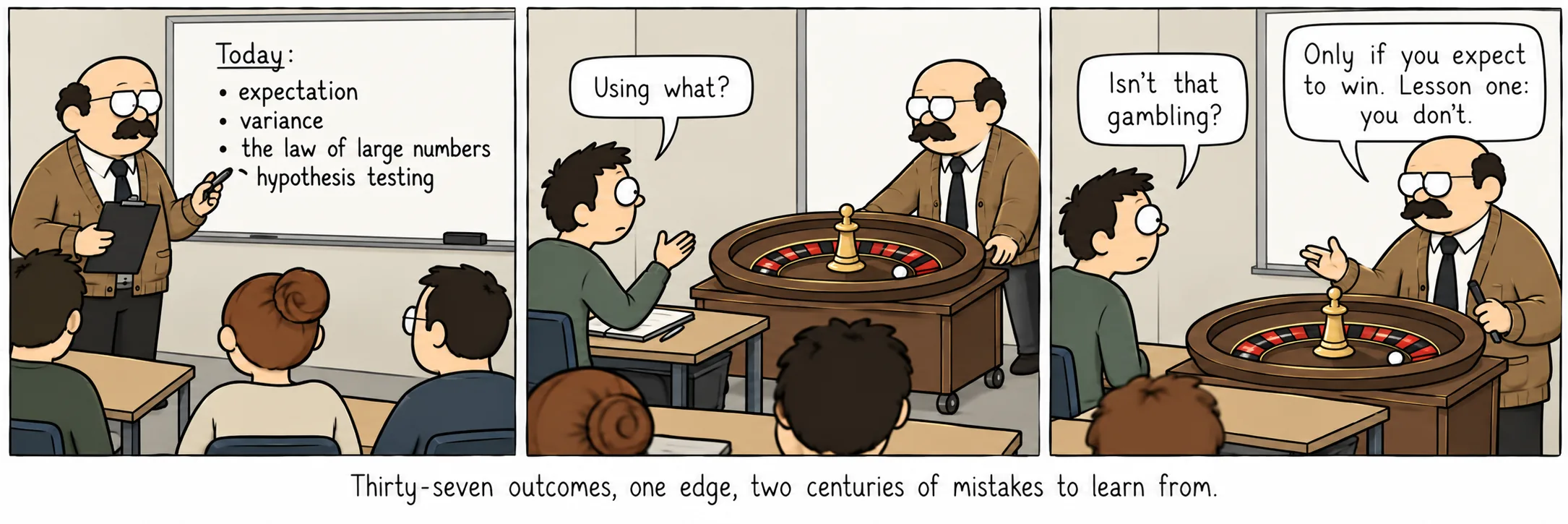
Thirty-seven result, one edge, two century a mistake fi learn fram.
Source dem
- Feller, W. An Introduction to Probability Theory and Its Applications, Vol. 1.
- Ethier, S. N. The Doctrine of Chances: Probabilistic Aspects of Gambling.